

When you start looking for a truly comfortable sofa, it’s easy to get sidetracked by colours and styles. But the secret to lasting comfort lies deeper, in the quality of the materials you can’t always see. The best sofas—the ones that feel just as good in year five as they do on day one—are built with solid foundations like kiln-dried hardwood frames, supportive high-density foam or feather-wrapped cushions, and fabrics that feel great and stand up to daily life.
Your Search for the Perfect Sofa Starts Here
Buying a new sofa isn't just another purchase; it's a real investment in your home's comfort and your own well-being. This guide is designed to help you look past the showroom gloss and understand what really makes a sofa worth bringing home. We'll go beyond pure aesthetics and get into the nitty-gritty of what creates that deep, lasting comfort.
Think of this as your personal checklist for making a smart choice. By the time you're done, you'll know how to pick a sofa that’s more than just a piece of furniture—it’ll be your go-to spot for genuine relaxation.
Why Comfort Is Now King
Over the past few years, there's been a clear shift in what UK buyers want from their furniture. We’re all spending more time at home, and we want it to be a proper sanctuary. Style is still important, but comfort has firmly taken the top spot.
This isn’t just a feeling; the numbers back it up. In 2022, the sofa and couch segment was the fastest-growing category in the furniture market, and it’s expected to keep growing. It shows just how much we've started to value well-made, genuinely comfortable seating. You can dive deeper into the UK furniture market outlook on Grand View Research.
This focus from buyers has pushed manufacturers to innovate, bringing better materials and smarter designs to the forefront. Understanding what these are is your biggest advantage.
A great sofa should be a destination in your home—a place you actively look forward to sinking into after a long day. It’s about creating an experience, not just filling a space.
What This Guide Will Cover
To help you navigate the huge range of sofas available in the UK, we're going to break down the essential building blocks of comfort. You'll soon be able to walk into a showroom (or browse online) and know exactly what you're looking for.
Here’s what we’ll explore:
- The Core Components: We’ll look at fillings, frames, and suspension systems. This is the hidden engineering that separates a saggy, disappointing sofa from an exceptional one.
- Tactile Fabrics: It’s not just about colour. We’ll cover how different materials feel and help you find the right balance between a soft touch and the durability your home actually needs.
- Lifestyle-Ready Configurations: From flexible modular designs to indulgent recliners perfect for a home cinema, we’ll match different sofa shapes to the way you live.
Understanding the Anatomy of a Comfortable Sofa
What really makes one sofa a dream to sit on and another a disappointment? It’s not just about the colour or style you see in the showroom. The real secret to lasting comfort is hidden away, deep inside its construction.
To find the most comfortable sofas the UK has to offer, you need to think like an expert and look beyond the surface. It helps to break a sofa down into its three core components: the fillings that create the initial feel, the frame and suspension that provide the underlying support, and the dimensions that ensure it’s a perfect fit for you.
Let’s pull back the fabric and see what truly matters.
By focusing on what’s inside—the fillings, the frame, and the fabric—you’re setting yourself up to find a sofa that’s genuinely built for comfort, not just for looks.
The Cushions: What’s on the Inside Counts
The material inside your sofa cushions is the single biggest factor in how it feels the moment you sit down. It dictates whether you’ll sink into a cloud-like embrace or feel propped up on a firm, supportive base. There’s no right or wrong answer here; it all comes down to personal preference.
To help you decide, here’s a quick rundown of the most common filling materials you’ll find.
Comparing Sofa Filling Materials for Ultimate Comfort
This table offers a quick-reference comparison of the most common sofa filling materials, highlighting their feel, maintenance needs, and who they're best suited for.
| Filling Type | Comfort Feel | Maintenance Level | Best For |
|---|---|---|---|
| Foam | Firm, supportive, and springy. Bounces back into shape easily. | Low – Requires minimal plumping. | Those who prefer a structured seat and easy maintenance. |
| Feather & Down | Luxuriously soft and plush. Creates a classic "sink-in" feeling. | High – Needs regular plumping to maintain its shape and loft. | Anyone craving ultimate softness and a relaxed, cosy aesthetic. |
| Fibre | A soft, affordable alternative to feathers. Good for allergy sufferers. | Medium – Can flatten over time and requires frequent plumping. | Budget-conscious buyers or those with feather allergies. |
| Foam & Feather Hybrid | The best of both worlds: a supportive foam core wrapped in soft feather. | Low-Medium – Less plumping needed than pure feather. | People who want a soft surface feel with resilient underlying support. |
As you can see, the choice between foam, feather, or a hybrid really shapes your daily experience. A popular modern choice is the foam and feather hybrid, which gives you that initial plushness without the constant need for plumping.
The Foundation: Frame and Suspension
Beneath the cushions lies the sofa's skeleton—its frame and suspension. This is the unsung hero of a great sofa. A robust frame is non-negotiable if you want consistent support and a piece of furniture that will last for years, not just a season.
The gold standard here is a frame made from kiln-dried hardwood. The kiln-drying process removes moisture, which stops the wood from warping or cracking as it ages. Cheaper sofas often use particleboard or softwoods, which are notorious for creaking, flexing, and failing over time.
A well-built sofa frame should be completely silent. When you're in the showroom, don't be shy. Try lifting one of the front corners off the floor—if the frame twists or flexes, it's a major red flag.
Just as important is the suspension, the network of springs or webbing that holds the cushions up. Serpentine (or ‘S-shaped’) springs are a common and reliable choice. For a truly top-tier sofa, look for an eight-way hand-tied spring system. In this traditional method, each spring is tied to its neighbours, creating a web of support that distributes weight perfectly and offers outstanding durability.
Ergonomics: Finding Your Perfect Fit
Finally, even the best-made sofa won't feel comfortable if its dimensions don't suit your body. This is where comfort gets personal. A sofa that’s perfect for someone over six feet tall might feel completely wrong for someone more petite.
Pay close attention to these key measurements:
- Seat Depth: This is the distance from the front edge of the seat to the back cushion. Deeper seats are brilliant for lounging, curling your legs up, and taller people. Shallower seats, on the other hand, encourage a more upright posture and make it easier to stand up, which is great for more formal spaces.
- Seat Height: The ideal height lets you sit with your feet flat on the floor and your knees bent at a comfortable 90-degree angle. If it’s too high or too low, you’ll notice it after a while.
- Back Height: A low-backed sofa can look incredibly sleek and modern, but it won’t offer much in the way of head and neck support. If movie nights are a priority, a higher back or a model with adjustable headrests will make a world of difference.
For the ultimate in personalised comfort, nothing beats a recliner. If you're looking for a sofa that can adapt to your exact needs, explore the range of electric recliner sofas available at Elite Sofas UK to find your perfect match.
Choosing Fabrics That Feel as Good as They Look
Once you’ve nailed down the "unseen" elements of comfort—the fillings, suspension, and frame—it’s time to focus on the part you’ll see and touch every single day. The fabric is where comfort truly comes to life. It’s what transforms a sofa from a functional piece of furniture into an inviting, cosy centrepiece for your home.
Picking the right material is about so much more than just the colour. You need to think about how it will feel against your skin after a long day, whether it will stay cool during a warm summer afternoon, and, crucially, how it will hold up to the realities of daily life. The perfect fabric strikes that delicate balance between a luxurious feel and genuine, real-world resilience.
This choice is also part of a bigger picture. As our lifestyles evolve, so do our furniture preferences, with imported sofas now forming a major part of the UK market. This trend brings a fantastic variety of styles and materials to our doorsteps. For those interested in the numbers, you can find more insights on UK furniture sales at The Furnishing Report.
A Guide to Popular Sofa Fabrics
Every fabric has its own distinct personality. Some are all about incredible softness, while others are built like champions of durability. Getting to know these characteristics is the key to finding the perfect match for your home and lifestyle.
Here’s a quick rundown of the most popular choices:
- Natural Linen: Famous for its relaxed, breathable feel, linen is a fantastic choice for keeping things cool and comfortable. It looks effortlessly elegant but does have a tendency to wrinkle. Unless it’s a high-performance blend, it might not be the best pick for homes with young children or pets.
- Plush Velvet: If you’re after a touch of pure luxury, you simply can't beat velvet. It’s wonderfully soft to the touch and comes in a stunning range of deep, rich colours. Don’t be fooled into thinking it’s delicate, though—modern performance velvets are surprisingly tough and often treated to resist stains, making them more family-friendly than ever.
- Classic Leather: Timeless, tough, and only gets better with age. Leather develops a beautiful, unique patina over time, is naturally hypoallergenic, and is a breeze to wipe clean. Just be aware that quality varies hugely; top-grain leather offers the best blend of comfort and longevity.
- Durable Woven Fabrics: Materials like chenille, tweed, and modern polyester blends are the workhorses of the sofa world. Their tight weave makes them incredibly resilient against snags and daily wear and tear, which is exactly what you need in a busy family living room.
How to Measure Durability: The Martindale Test
While browsing fabrics, you might see a "Martindale score." What on earth is that? In simple terms, it's a fabric's endurance rating. A machine rubs the material with a standard abrasive surface until it shows wear, and the number of rubs it withstands becomes its score.
Think of the Martindale test as a standardised 'rub count' for fabrics. A higher number means a more durable material, giving you peace of mind that your upholstery can handle everything life throws at it.
Here’s what those numbers generally mean for a sofa in your home:
- 10,000 to 15,000: Best for decorative or occasional use, like a bedroom chair.
- 15,000 to 25,000: Good for general domestic use. This is a solid choice for a main living room sofa.
- 25,000 to 30,000: This is heavy-duty territory, perfect for furniture that sees constant, heavy use from the whole family.
- 30,000+: Commercial grade. This stuff is practically bombproof and offers maximum resilience.
For most family homes, a score of 20,000 or higher is a fantastic benchmark. It ensures your sofa's fabric will look great for many years to come.
The Importance of Touching and Feeling
Technical specs like the Martindale score are brilliant for narrowing down your options, but nothing beats actually feeling the fabric for yourself. The texture, the softness, how the colour changes in the light—these are things a screen just can’t tell you. This is why ordering swatches is an absolutely essential step.
Getting a swatch in your hand lets you see how the colour really looks in your room, with your lighting. You can feel it against your skin, drape it over your current furniture, and even spill a little water on it to see what happens. It takes all the guesswork out of the decision.
To find the perfect material for your home, you can easily order free fabric swatches from Elite Sofas UK and experience the quality for yourself before you commit.
Finding a Sofa Configuration for Your Lifestyle
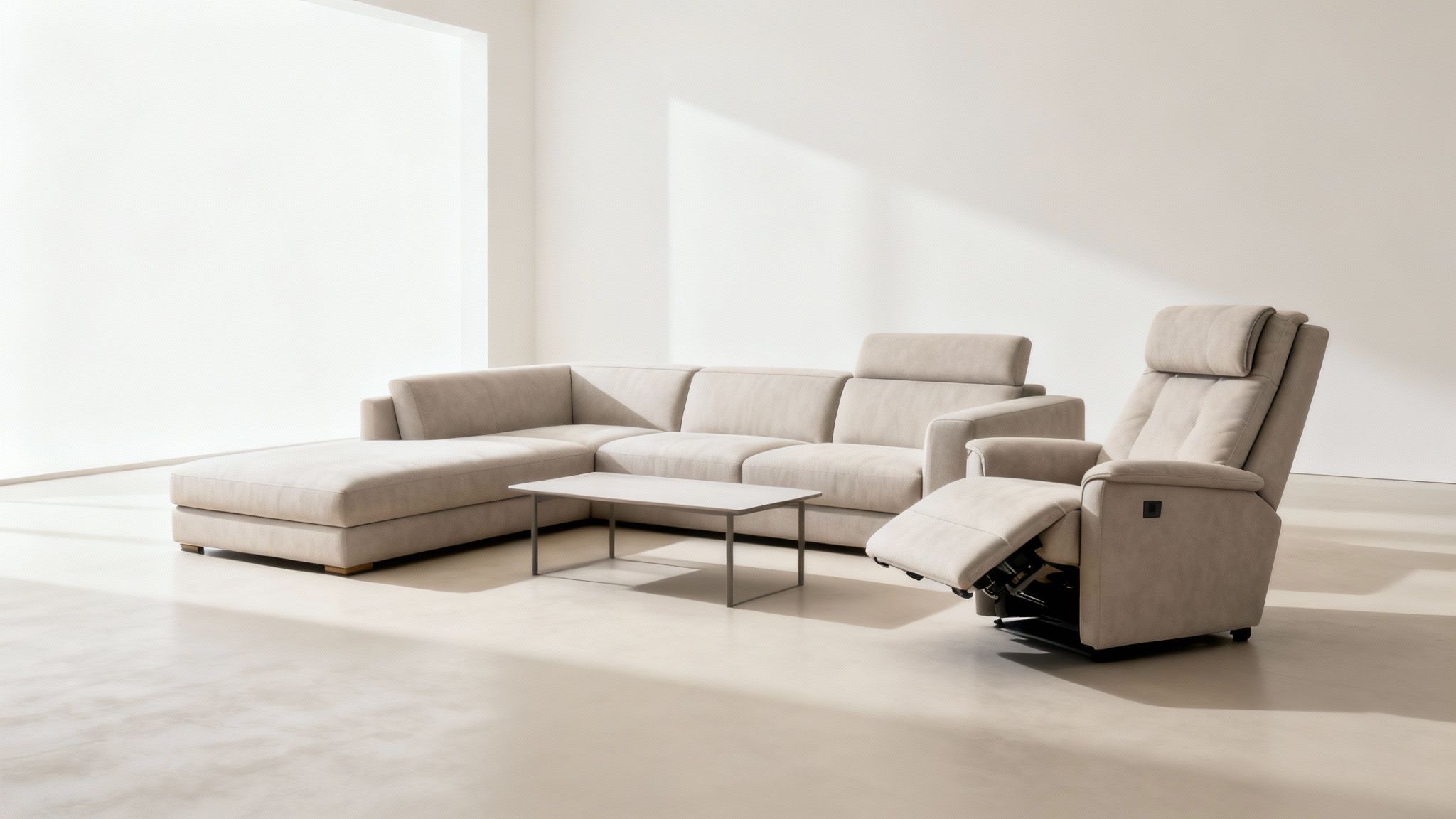 Real comfort is about more than just plush cushions and soft fabrics. It’s about how a sofa fits into your home and, more importantly, into your life. The right configuration—the shape and function of your sofa—can turn a simple room into the true heart of your home, whether you're hosting a big get-together or settling in for a quiet movie night.
When you choose the right shape, your sofa stops being just another piece of furniture. It starts actively improving your daily routine. From sprawling sectionals that gather everyone together to clever recliners built for one, the perfect fit for your lifestyle is out there.
This shift towards multi-functional, truly comfortable furniture has been a huge trend in the UK. A recent surge in new home builds has fuelled demand for sofas that are not only stylish but also practical for modern living, as highlighted in this Statistics Digest for the UK Furniture Industry.
The Ultimate Flexibility of Modular Sofas
Imagine a sofa that can grow with your family, move with you to a new house, or simply change its layout when you fancy a refresh. That’s the beauty of a modular sofa. These incredibly versatile pieces are made up of individual sections, or 'modules', that you can arrange and rearrange in countless ways.
This adaptability makes them one of the most comfortable and practical choices for UK homes, where living spaces can have quirky layouts and our needs are always changing.
- Growing Families: You could start with a simple two- or three-seater, then add a corner piece or a chaise longue as your family gets bigger.
- Awkward Spaces: A modular sofa can be configured to wrap around a tricky corner, slot perfectly into a bay window, or define an open-plan area.
- Renters on the Move: Because each section is smaller and lighter than a traditional sofa, moving house becomes far less of a headache.
The endless customisation means you can literally build the perfect seating for your exact room. If this sounds like the solution you’ve been looking for, our guide explains in more detail what is a modular sofa and all its benefits.
Corner Sofas and U-Shaped Sectionals
If you’re the life and soul of the party or have a big family to seat, corner and U-shaped sofas are brilliant. They’re fantastic for creating a social, welcoming atmosphere, naturally encouraging conversation by letting everyone face each other.
A classic corner sofa, often called an L-shaped sofa, makes clever use of corners that might otherwise become dead space. It offers generous seating without overwhelming the room, giving your living area a beautiful anchor point.
A U-shaped sectional takes things to the next level. It creates a cosy, enclosed seating 'pit' that’s just perfect for family movie marathons or game nights. It’s the ultimate configuration for anyone wanting to maximise seating and create an undeniable hub for friends and family.
Think of a U-shaped sofa as your home’s private social club. It’s a design that naturally brings people together, making it the undeniable centre of activity and relaxation in any home.
The Unmatched Comfort of Recliner Sofas
When it comes to pure, blissful relaxation, nothing comes close to a recliner. Engineered for ergonomic support, these sofas let you kick your feet up and find that perfect angle for reading, napping, or binge-watching your favourite series. Thankfully, modern designs have left their bulky reputation behind, now boasting sleek profiles that look right at home in contemporary living rooms.
When you’re shopping for a recliner, you’ll mainly find two types:
- Manual Recliners: These are operated with a simple lever or handle and are typically more budget-friendly. They’re straightforward, reliable, and don’t need to be near a power socket.
- Electric Recliners: With smooth, push-button control, electric models offer a much wider range of positions. Top-tier versions often come with extras like adjustable headrests, lumbar support, and even built-in USB ports for charging your devices.
Electric recliners give you a level of personalised comfort that manual ones just can't match. For anyone serious about creating a proper home cinema experience or who simply wants the best in tailored relaxation, an electric model with an adjustable headrest is a fantastic investment.
A Practical Checklist for Testing Sofa Comfort
You've read up on fillings, frames, and fabrics, but theory only gets you so far. The real acid test happens when you put a sofa through its paces, whether you’re in a bustling showroom or carefully weighing your options online. A little due diligence now saves you from that sinking feeling of buyer’s remorse later.
Think of this as your go-to routine for sniffing out the most comfortable sofas on the UK market. A few simple, deliberate actions can tell you everything you need to know about how a sofa will feel and hold up over time.
Your In-Store Sofa Testing Routine
When you’re in a showroom, don’t be shy. A sofa is a big deal, and it needs a proper test drive. Honestly, spending just five to ten minutes on this routine will tell you more than any sales pitch ever could.
First, try out your go-to positions. Sit down like you normally would at home. Can your feet rest comfortably on the floor? Is the seat deep enough to support your legs without you having to perch on the edge?
Next, get properly settled in. Slouch a bit, as if you’re settling in for a movie marathon. Does the back still offer support where you need it, or are there gaps?
Finally, lie down. Stretch right out as if you're about to have a cheeky nap. Is there enough room? More importantly, can you feel any hard parts of the frame digging into you through the cushions? This simple three-part check covers pretty much every way you'll use your sofa from day to day.
Your body is the ultimate comfort gauge. Don't just sit politely on the edge of a sofa in a showroom. Get comfortable, slouch, and even lie down to see how it will really feel when you get it home.
Now for a quick quality check. Run your hands firmly along the arms and across the back. You should only feel generous padding, not the sharp, unforgiving edges of the wooden frame underneath.
Lastly, give it a little test lift. Grab one of the front corners and try to raise it slightly off the ground. A solid, well-built frame will feel completely rigid. If it twists, creaks, or wobbles in your hands, that’s a clear red flag pointing to poor construction that’s only going to get worse.
How to Confidently Buy a Sofa Online
Buying a sofa without trying it first can feel like a leap of faith, but you can absolutely stack the odds in your favour. The trick is knowing what to look for in the digital details.
Start by poring over the product specifications. Keep an eye out for reassuring phrases like “kiln-dried hardwood frame” or “high-density foam core.” These aren't just buzzwords; they signal a real commitment to quality materials designed to go the distance.
Next, play detective with the customer reviews. Don't just scan the star ratings. Dig deep for comments that talk about comfort after months of real-world use. Phrases like “still as supportive as the day it arrived” are pure gold and worth far more than someone's first impression.
Finally, and this is crucial, get the logistics sorted before you click "buy":
- Order Fabric Swatches: This is non-negotiable. It’s the only real way to feel the texture and see how the colour looks in the light of your own home.
- Measure Everything: Double-check the sofa’s dimensions against your living space, of course. But don't forget to measure your doorways, hallways, and any awkward corners on the delivery path.
- Confirm the Returns Policy: A retailer with a straightforward, fair returns policy is showing confidence in what they sell. Knowing you have that safety net makes the whole decision a lot less stressful.
Keeping Your Sofa Comfortable for Years to Come
You’ve found it—the perfect sofa that feels like a dream. But bringing it home is just the beginning. To make sure that incredible, sink-in comfort lasts, a little bit of regular care is all it takes. Think of it less as a chore and more as protecting your investment in relaxation.
Just like a good pair of shoes needs a polish to stay looking its best, your sofa needs some simple upkeep. A few minutes each week can prevent premature sagging and wear, ensuring it remains the best seat in the house for many years.
The Five-Minute Weekly Refresh
Keeping that ‘brand new’ feel is surprisingly straightforward. It’s all about creating a few simple habits that stop common problems before they even start.
If you have feather or fibre-filled cushions, the most important thing you can do is give them a good plumping. Just a quick shake and a fluff-up once a week is enough to redistribute the filling, keeping it airy and preventing it from getting compacted. This one small action makes a massive difference to that lovely, inviting look and feel.
Your sofa is arguably the hardest-working piece of furniture in your home. A little TLC ensures it stays ready for everything from movie nights to afternoon naps.
For even wear and tear, try to get into this simple routine:
- The Cushion Shuffle: Once a month, flip your seat and back cushions and swap their positions. We all have a favourite spot, and this simple rotation prevents that one seat from becoming noticeably more worn than the others.
- A Quick Vacuum: Use the soft brush attachment on your vacuum cleaner to go over the sofa weekly. This lifts away the dust, crumbs, and other tiny abrasive particles that can slowly wear down the fabric over time.
Dealing with Spills and Stains
Life happens, and spills are inevitable. The key is to act fast. A quick response can stop a small accident from becoming a lasting mark. Before you do anything, though, always check the cleaning codes on your sofa’s care label.
For most fabrics, the golden rule is to blot, never rub. Grab a clean, dry cloth and gently dab the spill to absorb as much as you can. Rubbing just grinds the liquid deeper into the fibres. If you need to use a cleaning solution, always test it on a hidden spot first—like the back of the sofa or under a cushion—to make sure it doesn't affect the colour. A little care goes a long way in keeping your sofa looking and feeling fantastic.
Got Questions? We’ve Got Answers
Even after breaking down all the details, you might still have a few questions buzzing around. It's completely normal when you're making such an important choice. Let's tackle some of the most common queries we hear from shoppers looking for the UK's most comfortable sofas.
What’s the Best Filling for a Sofa That’s Both Comfy and Durable?
There’s no single "best" filling—it really boils down to what you find most comfortable. Do you prefer to sink into your sofa, or do you like a firmer, more supportive seat?
For most people, a hybrid filling hits the sweet spot. Look for a cushion with a high-density foam core wrapped in a generous layer of feather or fibre. This gives you the best of both worlds: the foam provides deep-down support that won’t sag, while the feather wrap gives you that soft, inviting feel as soon as you sit down. It’s a combination that holds its shape beautifully over time.
Pure feather fillings are the last word in luxury and give you that classic, cloud-like feeling. Just be prepared to give them a good plump every so often to keep them looking their best. On the other hand, foam is a workhorse, offering fantastic support that bounces back, but nothing quite matches the plushness of feathers.
How Can I Tell if a Sofa is Good Quality When Buying Online?
It's tricky when you can't see it in person, but there are definitely clues to look for. Go beyond the glossy lifestyle photos and dig into the product specifications.
You're looking for phrases like "kiln-dried hardwood frame" or "high-density foam cushions." These aren't just buzzwords; they're solid indicators of quality materials and construction that are built to last.
Next, become a detective and read the customer reviews. Don’t just skim them—look for comments about how the sofa feels after six months or a year. Honest feedback about how the comfort and structure have held up is pure gold.
Before you even think about adding a sofa to your basket online, find and read the returns policy. A straightforward, no-fuss returns process isn't just a safety net for you; it's a sign that the company stands behind the quality of its products.
And one last thing: always, always order fabric swatches. It's the only real way to feel the texture and see how the colour looks in your own home, with your lighting. It takes all the guesswork out of the equation.
Are Recliner Sofas a Bit… Unfashionable?
That's an old myth that modern sofa design has well and truly put to bed. The days of bulky, overstuffed recliners that dominate a room are long gone.
Today's recliner sofas are often incredibly sleek and stylish. Many have slim profiles and cleverly concealed mechanisms, making them almost impossible to tell apart from a high-end static sofa. You absolutely don’t have to choose between ergonomic comfort and contemporary design anymore. With so many minimalist styles and modern fabrics available, a recliner can be the most stylish—and comfortable—seat in the house.
At Elite Sofas UK, we don't think you should ever have to compromise. Whether it's style, comfort, or lasting quality you're after, we've got you covered. Take a look at our collection of premium modular sofas and state-of-the-art electric recliners to find the perfect centrepiece for your living space.
Discover your new sofa at Elite Sofas UK today.
Article created using Outrank


