

It’s a common misconception that corner sofas are only suited for sprawling, open-plan living rooms. In reality, nothing could be further from the truth. The right corner sofa for a small space can be an absolute game-changer. It cleverly uses what is often dead space, maximising your seating and carving out a cosy, defined nook without swallowing up the entire room. Forget bulky intruders; think of them as your secret weapon in smart, space-savvy design.
The Surprising Benefits of a Corner Sofa in a Compact Home
It might feel a bit backwards, but committing a corner to one larger piece of furniture can actually make a small room feel bigger and more organised. Rather than dotting a two-seater and an armchair around—which often chops up the space and creates clutter—a corner sofa pulls all your seating into one streamlined, inviting hub. This one simple move anchors the room and, crucially, leaves the central floor space clear and open.
Think of it as reclaiming lost territory. The corners of our rooms are frequently awkward, neglected spots. A well-chosen corner sofa slots perfectly into this area, transforming it into the social heart of your home. You’ll find you get far more bum-on-seat space than you ever would with a separate sofa and chair in the same footprint.
Defining Your Space with Style
There’s a real sense of calm and order that comes from a single, unified piece of furniture. In a compact living area, a corner sofa creates a distinct zone for relaxing and gathering, which is a massive plus in modern open-plan flats where living, dining, and cooking spaces all bleed into one. That clear boundary helps the entire area feel less chaotic and more thoughtfully put together.
By tucking your seating neatly against two walls, a corner sofa keeps the main walkways and the visual centre of the room open. This completely avoids that ‘furniture obstacle course’ feeling, making the whole room flow better and feel more spacious.
Meeting Modern Living Demands
This move towards more efficient furniture isn’t just a passing trend; it’s a direct response to how our homes are evolving. We’ve seen a huge rise in demand for corner sofas specifically designed for tighter living spaces across the UK, driven by growing cities and the reality of new-build homes. In fact, the Office for National Statistics found that the average new-build home in England shrank from 87 square metres in 2010 to just 76 square metres in 2023. This really shines a light on the need for smarter furniture choices. You can read more in the ONS findings on housing.
Ultimately, choosing a corner sofa for a small space is a strategic decision. It’s about making one clever move that solves several problems at once: getting the most seating possible, creating defined zones, and keeping your home feeling open and uncluttered.
How to Perfectly Measure Your Room
Before you even start browsing, it’s time to become best friends with your measuring tape. I can’t stress this enough: getting your measurements right is the single most important part of buying a corner sofa for a small space. It’s the one thing that prevents that heartbreaking moment when you realise the sofa you’ve waited weeks for simply won’t fit.
This isn’t just about the two walls where it will live. You need to think like a delivery driver, an interior designer, and a homeowner all at once. The goal is to map out every centimetre of the journey, from your front door to its final, perfect spot in the living room.
The infographic below really brings to life what you gain when you get this right.
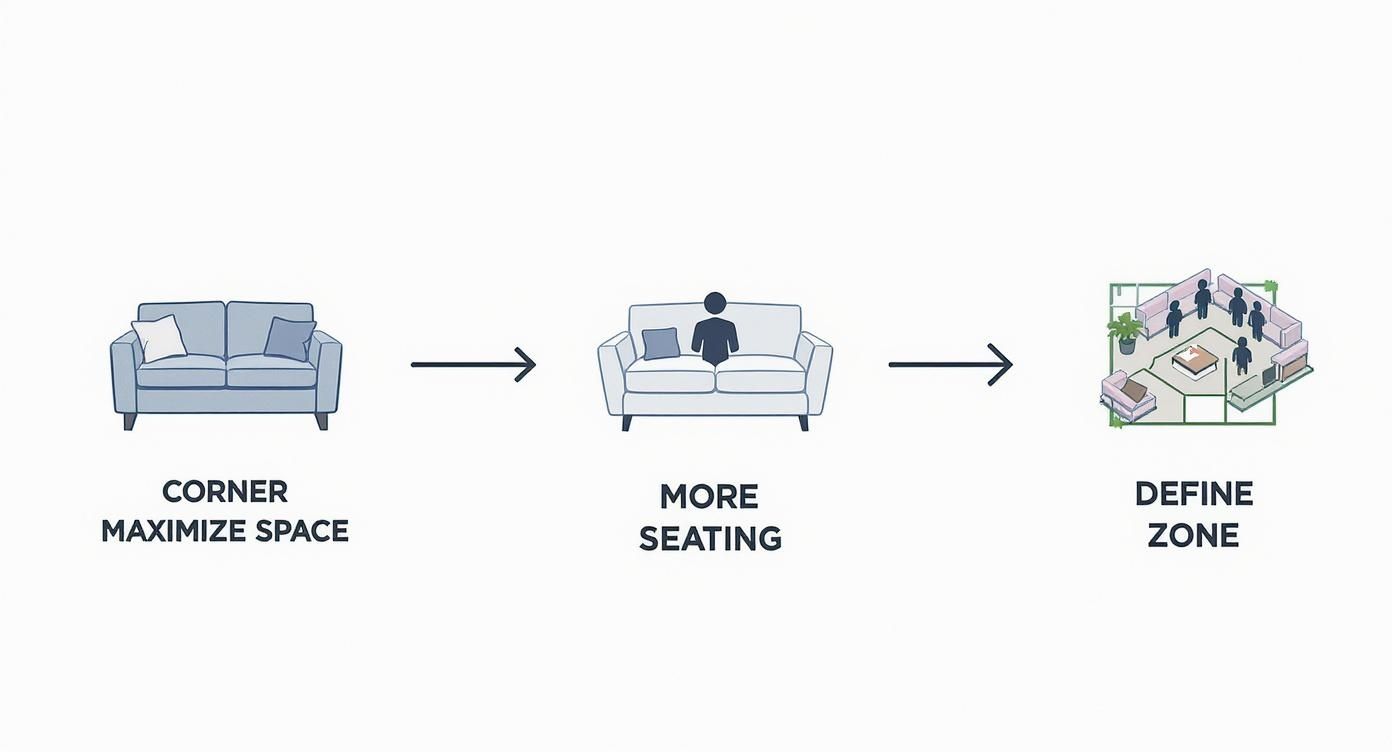
As you can see, a well-chosen corner sofa is a master of efficiency. It unlocks unused floor space, gives you more seating than a traditional sofa, and neatly defines a cosy zone within your room—all huge wins in a smaller home.
Mapping Out Your Sofa’s New Home
Right, let's start with the space itself. Grab your tape measure, a pen, and a notepad—this is where the planning begins.
-
Measure the Wall Dimensions: First, measure the full length of both walls that will form your corner, running the tape from one end to the other. Jot these down as ‘Wall A’ and ‘Wall B’. This gives you the absolute maximum footprint you’re working with.
-
Account for Obstacles: Now, look closer. Are there any radiators, prominent skirting boards, light switches, or plug sockets along those walls? Measure where they are and how far they stick out. If a radiator juts out 10cm, your usable wall space is immediately 10cm shorter. Don’t get caught out by these details!
-
Consider Doors and Windows: Check for any nearby doors and the path they swing open. You don’t want your beautiful new sofa blocking the entrance to the room. Also, take a look at your window sills. A corner sofa with a high back might look odd or block precious light if it sits higher than the sill.
The Painter’s Tape Trick
Here’s a tip I always share with customers: create a visual footprint. It’s one of the best ways to get a real feel for how furniture will sit in your space, long before it arrives.
Find the dimensions of a sofa you like on our website and use low-tack painter's tape to mark out its exact shape on your floor. This simple trick takes the guesswork out of it. Suddenly, the numbers on the screen become a tangible outline in your home.
With the footprint taped out, walk around it. Is there enough room to move freely? Does the room feel balanced or cramped? A good rule of thumb is to leave at least 75cm for main walkways to keep the space feeling open.
Measuring the Delivery Path
This is the step everyone forgets, but it’s absolutely crucial. A sofa is no good to you if it’s stuck in the hallway. You need to measure every single pinch point on its route from the van to your living room.
To make this step foolproof, we've put together a simple checklist. Grab your tape measure and walk the delivery path, noting down each measurement as you go.
Your Essential Measurement Checklist
| Measurement Area | What to Measure | Pro Tip |
|---|---|---|
| Front Door & All Internal Doors | The height and width of the doorway opening. | Measure the narrowest point, often between the door frame, not the wall. |
| Hallways | The width at the narrowest point. | Watch out for radiators or console tables that reduce the available space. |
| Stairs | The width of the staircase. For turns, measure the diagonal space. | Check for low ceilings or light fittings that could get in the way. |
| Lifts (if applicable) | The internal height, width, and depth, plus the door opening dimensions. | The lift door is often smaller than the interior, so measure it carefully! |
Every sofa on the Elite Sofas UK website has its dimensions clearly listed. Before ordering, simply compare your delivery path measurements with the sofa's dimensions—especially its depth and diagonal height. A few minutes spent doing this now guarantees a smooth, stress-free delivery day and the peace of mind that your perfect corner sofa for a small space will settle into its new home without a hitch.
Choosing Between Modular and Fixed Designs
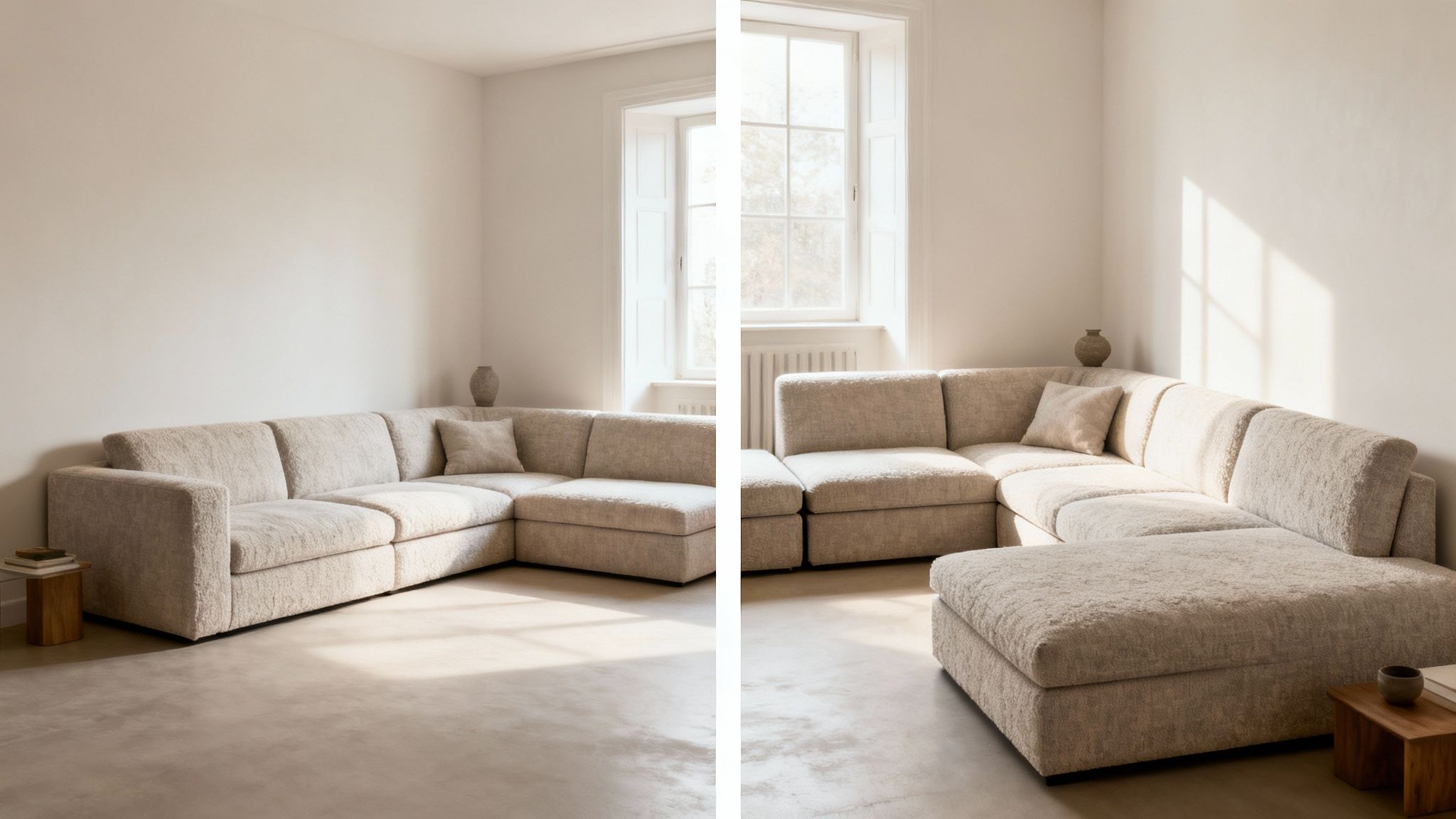
When you start looking for a corner sofa, particularly for a smaller room, you'll quickly find yourself at a crossroads: do you go for a fixed design or a modular one? It’s a key decision. Think of a fixed corner sofa as a single, beautifully sculpted piece. It’s built as one complete unit, usually in a set L-shape with a clear left or right-hand orientation. It’s classic, straightforward, and what you see is exactly what you get.
On the other hand, a modular corner sofa is more like a set of high-end building blocks. It’s made up of individual sections—or 'modules'—that you can connect and rearrange to your heart's content. This flexibility is its defining feature, giving you a level of customisation that a fixed design just can't offer. Ultimately, the choice comes down to a classic trade-off: the elegant simplicity of a fixed shape versus the endless adaptability of a modular setup.
The Case for Fixed Corner Sofas
There’s an undeniable elegance to a fixed corner sofa. Because it’s conceived and built as one continuous piece, the lines are often cleaner and the overall silhouette feels more unified and deliberate. This can be a real plus in a small living room, where creating a seamless, uncluttered look is often the main goal.
The buying process is also refreshingly simple. You pick your orientation (left or right-hand facing), choose your fabric, and your decision is made. It's the perfect approach if your layout is straightforward and you're confident the sofa will stay put for years to come.
- Aesthetic Unity: The single-piece design creates a sleek, uninterrupted profile that makes a space feel instantly more organised and polished.
- Structural Simplicity: With fewer connection points, these sofas can feel incredibly solid and robust under you.
- Ease of Choice: The decision-making is streamlined, which is ideal if you just want a beautiful, reliable sofa without getting lost in configuration options.
Of course, this simplicity is also its biggest drawback. A fixed sofa offers absolutely no flexibility. If you move house or just fancy a change of scenery in your living room, you’re stuck with its original shape. It’s a commitment, for sure, but one that pays off with timeless style if it’s the right fit for your forever space.
The Power of Modular Flexibility
Modular sofas are the interior design world's problem-solvers, especially when you're trying to fit a corner sofa into a small or awkwardly shaped room. Their adaptability is their superpower. You can build a configuration that slots perfectly into a tricky alcove or works around an odd floor plan in a way a fixed sofa never could.
But this flexibility goes well beyond the initial setup. As your life evolves, your sofa can evolve with you.
A modular sofa is an investment in adaptability. Need to create more floor space for a party? Simply detach a section and use it as a standalone armchair or ottoman. Moving to a new home? Your sofa can be reconfigured to fit a completely different room layout.
There's a practical bonus, too: delivery is a breeze. Because a modular sofa arrives in smaller, separate boxes, getting it through tight doorways, up narrow staircases, and around tricky corners is far less of a headache. It's a detail people often forget, but it makes a massive difference on delivery day. To get a better feel for how they work, you might want to read our guide that asks: what is a modular sofa?
Making Your Decision
To make the right call, have a good think about your lifestyle and your plans for the future. If you’re settled in your home with a clear vision for your living room, the clean, elegant lines of a fixed corner sofa could be the perfect centrepiece. It provides that classic, unified look that really anchors a room.
However, if you value adaptability, live in a rental property, or just love the freedom to switch up your layout whenever you feel like it, a modular design is the smarter, more forward-thinking choice. It’s a dynamic piece of furniture that grows with you, ensuring it remains a practical and much-loved part of your home for many years.
Choosing a Fabric and Frame That Will Actually Last
When you live in a smaller home, your sofa pulls double, sometimes triple, duty. It's not just for show; it's the heart of the home. It’s the command centre for movie nights, the impromptu office, the spot for a quick cuppa, and the place you collapse after a long day. All this daily action means that the durability of your corner sofa for a small space is every bit as crucial as its size.
To make sure you’re investing in a piece that will stand the test of time, you need to look past the beautiful colour or trendy shape. What really matters is what's on the outside—the fabric—and what's holding it all together on the inside—the frame. Get these two things right, and your sofa won't just look great when it's delivered; it'll be a source of comfort and pride for years to come.
Your Fabric: The First Line of Defence
Think of the fabric as your sofa's armour. It's the first thing to face off against spills, scuffs, pets, and the general chaos of daily life. While you obviously want it to look good, in a high-traffic, compact home, practicality has to be a top priority.
A good way to think about it is like the thread count in bedsheets. A tighter, denser weave usually signals a more robust fabric. Tightly woven textiles are far less likely to snag on a zip or a pet's claw, and they're better at preventing dirt from burrowing deep into the fibres.
If you've got kids or a furry friend, "performance fabrics" are a game-changer. Many modern materials, even luxurious-looking velvets and soft chenilles, now come treated to resist stains and repel water. That means a spilled drink will bead up on the surface, giving you a crucial window to dash for a cloth before it soaks in and leaves a mark.
Choosing the right upholstery is all about finding the sweet spot between the look you love and the life you actually live. A plush velvet can be surprisingly hard-wearing if it's a quality, short-pile version. On the other hand, a tough, flat-weave fabric is a practical workhorse that still looks incredibly chic and modern.
The Unseen Strength of a Solid Frame
While the fabric gets all the attention, the frame is the sofa's skeleton. It's the hidden foundation providing all the structural support. Without a sturdy frame, even the most gorgeous sofa will eventually start to creak, sag, and lose its shape.
For sheer, uncompromising durability, you simply can't beat a frame made from kiln-dried solid hardwood. The kiln-drying process is vital because it removes moisture from the wood, which stops it from warping or cracking over the years. This creates an incredibly strong, stable base that can easily handle everything you throw at it.
Try to be wary of frames built from softer woods like pine or composites like particleboard, as they're much more likely to fail under pressure. A good test? Give it a lift. A well-built hardwood frame will have a real, reassuring heft to it.
- Hardwood (Oak, Ash, Beech): This is the gold standard. You're investing in longevity and strength.
- Engineered Wood/Plywood: Can be a solid choice, but the quality can vary. It's best used for parts of the sofa that don't bear a lot of stress.
- Particleboard/Fibreboard: The least durable option, and one to avoid if you can. It's prone to cracking and sagging over time.
What's Inside a Cushion Counts
Finally, let's talk about what's inside the cushions. The filling doesn't just determine how comfy your sofa is on day one, but also how well it holds its shape and avoids that dreaded "pancake" look after a few months of use.
Foam is the most common filling, and its density is the best measure of its quality. High-density foam keeps its shape far better and provides much more support over the long haul. For that truly luxurious, sink-in feeling, cushions made with a foam core wrapped in feather or down offer the best of both worlds—you get the firm, supportive base of foam with a wonderfully soft outer layer. If you want to dive deeper, our guide to the most comfortable sofas in the UK covers this in more detail.
Ultimately, choosing a corner sofa that lasts is about making smart, informed decisions. By prioritising a strong hardwood frame, a resilient fabric, and supportive cushions, you're not just buying a piece of furniture—you're investing in something built to handle the real demands of a busy, modern home.
Smart Layouts for Small Living Rooms
Right, you’ve done the measuring and picked out a sofa style you love. Now for the fun part: making it all work in your actual room. Arranging furniture in a small space can feel a bit like a game of Tetris, but when everything clicks into place, it’s incredibly satisfying. The right layout won’t just fit your corner sofa for a small space in; it’ll make it feel like it was made for the room, completely changing the atmosphere.
There are a few go-to strategies that work wonders in typical UK homes, whether you're dealing with a long, narrow front room or a slightly awkward open-plan corner. The secret is to work with the shape of your room, not fight against it. That’s how you create a sense of flow and make the space feel bigger than it is.
Anchoring Your Sofa Against the Main Wall
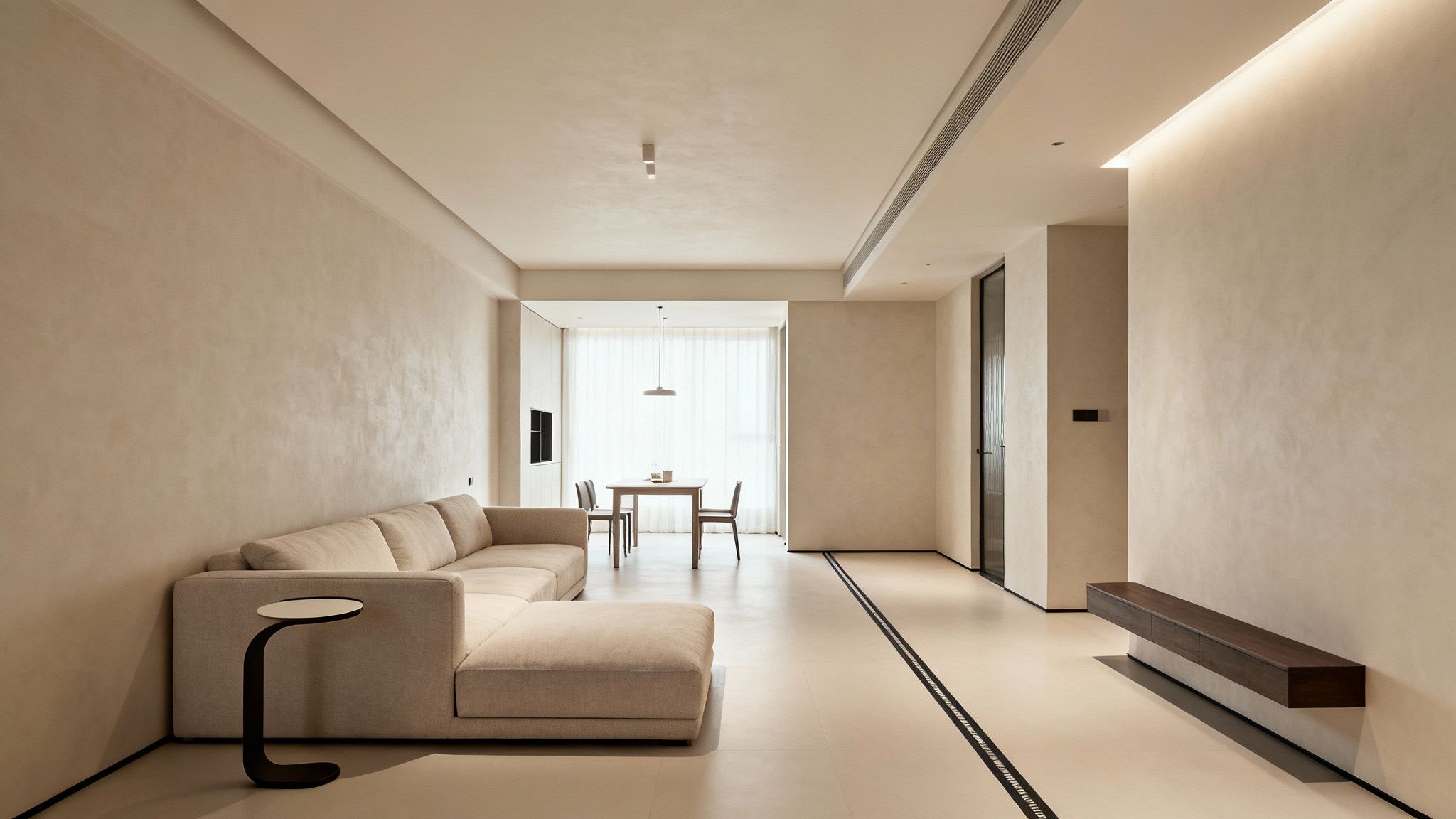
This is the classic approach for a reason—it almost always works. By placing your corner sofa against the longest wall, you instantly ground the room and give it a clear focal point. More importantly, it leaves the middle of the floor open, which is absolutely vital for creating the illusion of space.
This setup keeps walkways clear, so you’re not constantly having to sidestep furniture. It’s perfect for creating a dedicated social hub where the sofa is the undisputed heart of the room, and everything else is arranged around it.
Using a Chaise End to Define Zones
In modern open-plan homes, where the living area bleeds into the kitchen and dining space, a corner sofa with a chaise end is your best friend. That extended chaise section acts as a subtle, low-level partition, visually separating the chill-out zone from the rest of the room without putting up a physical barrier.
Think of it as a soft border. Positioning the chaise so it juts into the room creates a gentle psychological cue that says, "this is where the lounge begins." It’s a clever trick that brings a sense of order to an open space, making each area feel more distinct and purposeful.
This technique is especially useful in long, rectangular rooms. Pop the corner sofa at one end with the chaise pointing inwards, and you’ve just carved out an inviting lounge nook while leaving the rest of the room free for a dining table or desk.
Floating the Sofa in an Open Plan Space
It might sound counterintuitive in a small room, but "floating" your sofa—pulling it away from the walls—can create a surprisingly intimate and dynamic layout. This works best in slightly larger open-plan areas where you want to establish a cosy conversation pit in the centre.
When you pull the sofa away from the walls, you create walkways behind it. Paradoxically, this can make the room feel bigger because your eye can trace the full perimeter. This layout is particularly effective when you place a large rug underneath the whole arrangement; it anchors the seating and makes it feel like a self-contained island of comfort. To explore more ideas like these, we have a complete guide on how to arrange furniture in a small living room.
Pairing with Smart Supporting Furniture
Once your corner sofa is in position, the other furniture you choose is critical for keeping the space feeling open and uncluttered. In a small room, every single piece has to justify its place.
- Slim C-Tables: A brilliant alternative to a chunky coffee table. These can slide right over the sofa seat, giving you a spot for your cuppa or laptop without eating up precious floor space.
- Nesting Tables: These offer fantastic flexibility. Stack them away for day-to-day use, then bring them out when you have guests over for extra surfaces.
- Vertical Storage: Think up, not out. Tall, slim bookcases or floating shelves draw the eye upwards, which helps make the ceiling feel higher and, crucially, keeps clutter off the floor.
By combining a smart layout with carefully chosen, multi-functional furniture, you can create a living space that’s not just stylish but genuinely practical. Your corner sofa for a small space becomes the brilliant foundation for a room that simply works.
Making It Yours: The Elite Sofas UK Order Process
You’ve done the hard work—measuring, planning, and picturing the perfect corner sofa in your home. Now for the exciting part. Bringing that vision to life should be a smooth and enjoyable experience, which is why we've made ordering from Elite Sofas UK simple and transparent.
We want you to feel confident and looked after, from the moment you click 'buy' to the day you sink into your new sofa for the first time.
Seeing is Believing: Start with Swatches
A computer screen can never quite capture the true character of a fabric. How a deep velvet catches the evening light or how a textured weave feels against your hand are things you need to experience up close. This is why we can’t recommend our free fabric swatch service enough.
Getting swatches sent to your home lets you:
- Check the colour in your own light: See how it looks in the morning sun versus under your favourite lamp.
- Feel the texture for yourself: Is it a soft, plush velvet you're after, or a tough, family-friendly woven fabric?
- Match it to your room: Hold the samples up against your walls, curtains, and carpets to see how it all comes together.
It’s a small step, but honestly, it’s the most important one for making a decision you’ll be happy with for years. It takes all the guesswork out of the equation.
A Delivery Service Designed Around You
The thought of getting a bulky sofa through a narrow hallway can be daunting. We get it. That’s why our delivery service is built to be completely stress-free. Our two-person team will give you a clear delivery window, so you're not left waiting around all day.
All you need to do is make sure the path from your front door to its new home is clear of any trip hazards. Our professional crew will handle all the heavy lifting, expertly manoeuvring your new sofa into the room you’ve chosen.
We pride ourselves on a seamless experience. Our delivery teams are courteous, careful, and respectful of your home, ensuring your new furniture arrives safely and is placed exactly where you envision it.
Your Peace of Mind: Our Returns Policy
Ultimately, your happiness is what matters most. We’re confident in the quality and comfort of our sofas, but we also want you to feel completely secure in your purchase. That’s why we offer a simple, no-fuss 90-day returns policy.
If, for whatever reason, the sofa isn’t quite right for your space, you have the comfort of knowing you can return it. This gives you the freedom to choose your dream corner sofa with total confidence, knowing we stand firmly behind every piece we create.
Frequently Asked Questions
When you're trying to find the perfect corner sofa, especially for a smaller room, a few questions always pop up. Let’s tackle some of the most common queries we hear from our customers.
Will a Corner Sofa Make My Small Room Feel Smaller?
It's a really common worry, but in most cases, the answer is no – quite the opposite, in fact. A well-placed corner sofa can be a brilliant space-saving trick. By hugging the walls, it anchors the room and opens up the central floor space. This stops your living room from feeling cluttered, which can easily happen with a separate sofa and armchair combo.
The secret is to choose a design that feels light on its feet. Look for models with slim arms and raised legs. This creates a bit of breathing room around and underneath the sofa, letting light pass through and helping to create the illusion of a bigger, airier space.
What Is a Chaise End and Do I Need One?
Think of a chaise end as the part of the sofa that lets you put your feet up without needing a separate footstool. It's the long, extended seat on one side of a corner unit, designed for properly stretching out and relaxing.
For a compact home, a sofa with a chaise is a fantastic, multi-purpose piece. It gives you all the laid-back comfort of a lounger but in a single, streamlined unit. It’s perfect for film nights and also provides a handy extra perch for guests. In an open-plan living area, that chaise can also work as a subtle divider, neatly marking out your cosy lounge zone.
Are There Corner Sofas with Built-In Storage?
Yes, and honestly, they are an absolute game-changer for small homes. Many of our designs intended for cosier spaces come with clever, hidden storage. You'll most often find it beneath a lift-up chaise section, revealing a surprisingly generous compartment inside.
It’s the ideal spot for stashing away extra blankets, cushions, board games, or anything else you want tidied away but still close at hand. Opting for a corner sofa with built-in storage is one of the smartest moves you can make to keep your living room organised and make every square inch work harder.
How Do I Choose Between Right Hand and Left Hand Facing?
This really comes down to the unique layout of your room. It sounds more confusing than it is: a 'right-hand facing' (RHF) sofa has the chaise (the long bit) on your right as you look at it head-on. A 'left-hand facing' (LHF) sofa is simply the opposite.
The best way to decide is to stand in the main doorway of your living room and picture where the sofa will live. Think about the natural flow of the room – where do you walk? Where are the doors and windows? You generally want the chaise end to be on the side that's less of a walkway, often against a solid wall. This keeps the main route into your seating area clear and feels much more inviting.
Ready to find the perfect cornerstone for your living room? Explore our collection at Elite Sofas UK and discover a design that brings comfort, style, and smart functionality to your home. Explore the Elite Sofas UK Collection
Article created using Outrank


