

Trying to furnish a cramped living room often feels like a losing game of Tetris. The secret isn't to own less, but to choose smarter. This is where space-saving furniture comes in—cleverly designed pieces that boost both style and function, even in the tightest of spots. They can turn an awkward corner into a cosy nook, proving that you don't have to sacrifice comfort or aesthetics just because you're short on square footage.
Reclaim Your Living Room with Smart Furniture
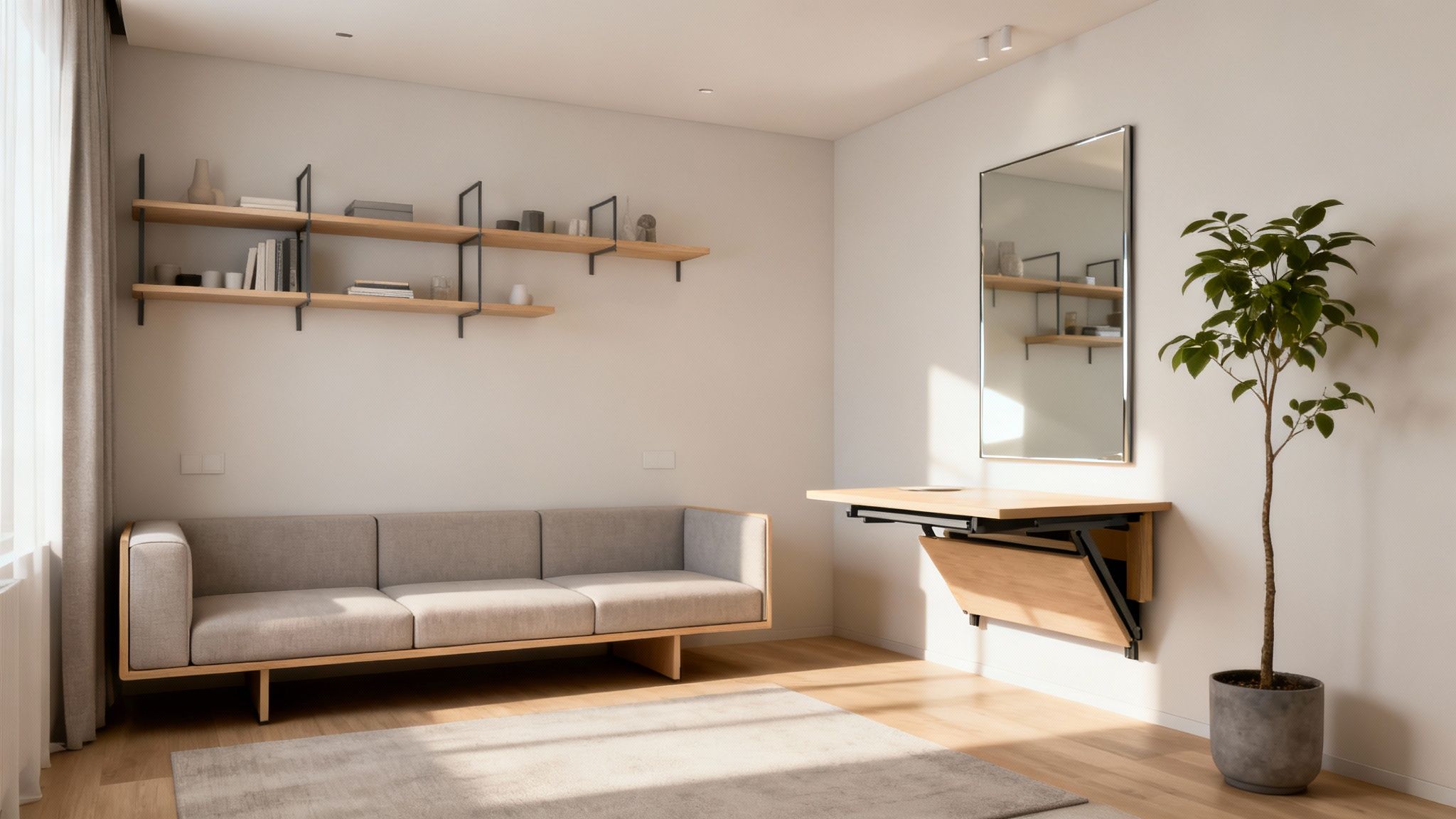
It’s easy to look at a small living area and see only limitations. But the real key to a functional, inviting home isn’t about the size of the room; it’s about the intelligence of the furniture within it. This guide is all about shifting your mindset from compromise to opportunity, showing you how the right pieces can unlock potential you never knew your space had.
Think of it this way: stop seeing your room as a suitcase to be crammed full and start viewing it as a well-organised toolkit. In a toolkit, every single item has a clear, valuable purpose. Nothing is wasted. The right furniture works in exactly the same way, with each piece solving a problem to improve the room’s flow, comfort, and organisation.
The Growing Need for Smart Furniture
This move towards smarter furnishing isn't just a fleeting design trend; it's a direct response to how we live now. Across the UK, the demand for space-saving living room furniture is climbing, driven by modern housing trends where every inch really does matter. Multifunctional pieces like sofa beds and storage ottomans are becoming essentials for homes with limited space. You can explore more insights into UK furniture market trends to see just how big this shift has become.
This guide is your practical roadmap. We’ll walk you through how to:
- Choose the Right Anchor Piece: Pinpoint the perfect sofa to act as the stylish, functional heart of your room.
- Embrace Multi-Functionality: Find furniture that works double-duty, from ottomans with hidden storage to clever nesting tables.
- Master Clever Layouts: Learn arrangement tricks that create a sense of openness and flow, even in a compact room.
By the end of this article, you'll see your living room not as a challenge, but as a canvas for clever, stylish, and practical design. It’s all about creating a space that feels spacious, organised, and genuinely welcoming.
Moving Beyond Conventional Ideas
The old-school approach of filling a room with bulky, single-purpose furniture just doesn't cut it for modern, compact living. A cumbersome three-piece suite, a heavy coffee table, and separate storage units will quickly eat up your floor space, making the room feel cluttered and hard to move around in.
Instead, we're going to focus on pieces with slim profiles, visible legs that create an illusion of space, and built-in versatility. When you prioritise furniture that adapts to your life—whether that means offering a spare bed for guests or hiding away clutter—you can build a living room that is both beautiful and brilliantly efficient. Let's get started.
Choosing Your Anchor Piece: Space-Saving Sofas
The sofa is so much more than just a place to sit; it’s the very heart of your living room. It's where you crash after a long day, gather with family, and catch up with friends. When you're working with a smaller space, your choice of sofa is absolutely critical. It has to anchor the room's style while also being incredibly functional. Get it right, and the perfect space-saving furniture for your living room can make even a tiny area feel open, airy, and brilliantly designed.
So, how do you pick this all-important anchor piece? It means looking past the big, bulky designs of old. Instead, we'll explore three smart solutions that are perfect for modern, space-conscious living: modular sofas, corner or chaise sofas, and the ever-practical sofa bed. Each brings something different to the table, tailored to various needs and layouts.
Modular Sofas: The Ultimate in Adaptability
Picture a modular sofa as a set of building blocks for your living room. It’s made up of individual sections, or 'modules', that you can arrange and rearrange to perfectly suit your space and your life. This built-in flexibility makes it one of the smartest choices out there, especially if you're dealing with an awkward layout or know you'll be moving in the future.
For renters, a modular system is a brilliant long-term investment. If you move from a small flat to a larger house, there's no need to buy a whole new sofa. You can simply add more modules to expand your seating. It's an adaptable approach that saves both money and hassle down the line.
Here’s why modular sofas work so well in compact living rooms:
- Customisable Configuration: You can build a classic two-seater, an L-shape, or even a U-shape, depending on what your room allows. Some pieces can even pull double duty as a standalone armchair or ottoman.
- Easy to Move: Getting a modular sofa into your home is a breeze compared to a traditional one-piece couch. Individual sections are much easier to navigate through tight hallways and tricky stairwells.
- Scalable Design: Your sofa can grow with you. Start with a simple two-piece setup and add more sections later as your family or space expands.
Corner and Chaise Sofas: Maximising Awkward Spaces
Let's face it, corners are often the most wasted real estate in a living room. Plonking a standard sofa against one wall can leave that corner feeling empty and a bit pointless. This is where corner sofas, sometimes called sectional sofas, really come into their own. By slotting neatly into a corner, they use every last inch of space for comfortable, sprawling seating.
A well-chosen corner sofa can give you the same amount of seating as a traditional three-piece suite but take up a much smaller physical and visual footprint. It's a clever design trick that instantly makes a room feel more organised and less cluttered.
Chaise sofas offer a similar space-saving punch but with a sleeker profile. The extended chaise lounge section is perfect for kicking your feet up without needing a separate ottoman, which immediately frees up precious floor space. In a narrow living room, a chaise can also create a strong visual line that helps to elongate the room, making it feel larger than it is. To explore this further, our guide on choosing a corner sofa for a small space has plenty of detailed tips.
Sofa Beds: The Two-in-One Powerhouse
Forget the lumpy, awkward sofa beds of the past. Today’s designs are a completely different beast, prioritising both sitting and sleeping comfort. This makes them an essential piece of space-saving furniture for living room owners to consider. A high-quality sofa bed gives you a stylish, comfortable place to sit by day and transforms into a genuinely welcoming guest bed by night.
This dual functionality is a game-changer in studio flats, one-bedroom homes, or any space that lacks a dedicated guest room. You're effectively eliminating the need for an extra bed, freeing up an entire room for other things, like a home office, a gym, or a hobby space.
When you're choosing a sofa bed, zoom in on the mechanism and the mattress quality. You’ll want to look for:
- Easy-to-use mechanisms that convert from sofa to bed without a struggle.
- High-density foam or memory foam mattresses for a comfortable night's sleep.
- A sturdy frame that's built to withstand regular use for both sitting and sleeping.
To help you decide, here's a quick comparison of these three fantastic options.
At-a-Glance Guide to Space-Saving Sofa Types
| Sofa Type | Best For | Key Feature | Consideration |
|---|---|---|---|
| Modular Sofa | Renters or those with evolving needs and awkward layouts. | Total customisation. Sections can be rearranged or added to over time. | The overall look can be more contemporary; might not suit traditional decor. |
| Corner/Chaise Sofa | Maximising unused corner space and defining zones in open-plan areas. | Uses every inch of the room, often providing more seating in less space. | Measure carefully to ensure it doesn't overwhelm the room or block pathways. |
| Sofa Bed | Homes without a guest room or anyone needing multi-functional furniture. | Provides a comfortable bed for guests without sacrificing a room. | Check the mattress quality and conversion mechanism before you buy. |
Each of these sofa types offers a brilliant solution for making the most of your square footage.
By investing in one of these smart sofa solutions from Elite Sofas UK, you’re not just buying another piece of furniture. You’re making a strategic choice to unlock your living room’s full potential for comfort, style, and everyday practicality.
The Art of Multi-Functionality: Furniture That Works Harder
When you’re short on space, every piece of furniture needs to earn its keep. The real secret to an efficient living room isn't just about the sofa; it’s about assembling a team of versatile problem-solvers that work smarter, not just harder.
Think of these items as the Swiss Army knives of your home. They pack multiple functions into one stylish design, maximising every square centimetre. This approach instantly streamlines your space, cutting down on the sheer number of things you need and banishing clutter. Instead of a separate coffee table, footstool, and storage box, why not have one elegant piece that does it all?
Beyond the Sofa: Versatile Supporting Players
While your sofa is the main event, the supporting cast is where you can get really creative with space-saving solutions. These are the pieces that provide that clever hidden storage and adaptable surfaces that make everyday life flow that much more smoothly.
Let's look at a few of the most effective options:
- Storage Ottomans and Benches: These are the unsung heroes of dual-purpose design. They’re a comfy place to put your feet up, they can act as extra seating when friends pop round, and they have a generous, hidden compartment perfect for tucking away blankets, magazines, or the kids' toys.
- Nesting Coffee Tables: A single, large coffee table can easily swallow up a small room. Nesting tables are a brilliant, flexible alternative. You can keep them stacked for daily use, then slide out the smaller tables when you need more surface area for drinks and snacks during a get-together.
- Slim Console Tables: Often overlooked, a slim console table is a fantastic addition. Placed against a wall or behind the sofa, it gives you a surface for lamps and decor without eating into your precious floor space. Some can even double as a compact desk when you need to work from home.
The goal is to choose furniture that can adapt to what you need on any given day. A piece that only serves one purpose is a luxury most compact living rooms simply can't afford. By prioritising versatility, you're building a space that's ready for anything.
This mindset is catching on all over the country. The demand for multifunctional furniture in the UK is growing, largely driven by smaller urban living spaces and a desire for smarter home solutions. Sofas are leading the charge, with modular and storage-integrated designs being particularly popular. You can discover more about the growth of the UK multifunctional furniture market to see how these trends are shaping our homes.
Choosing the right anchor piece is the first step. This visual guide helps break down which sofa type is the natural fit for different room shapes.
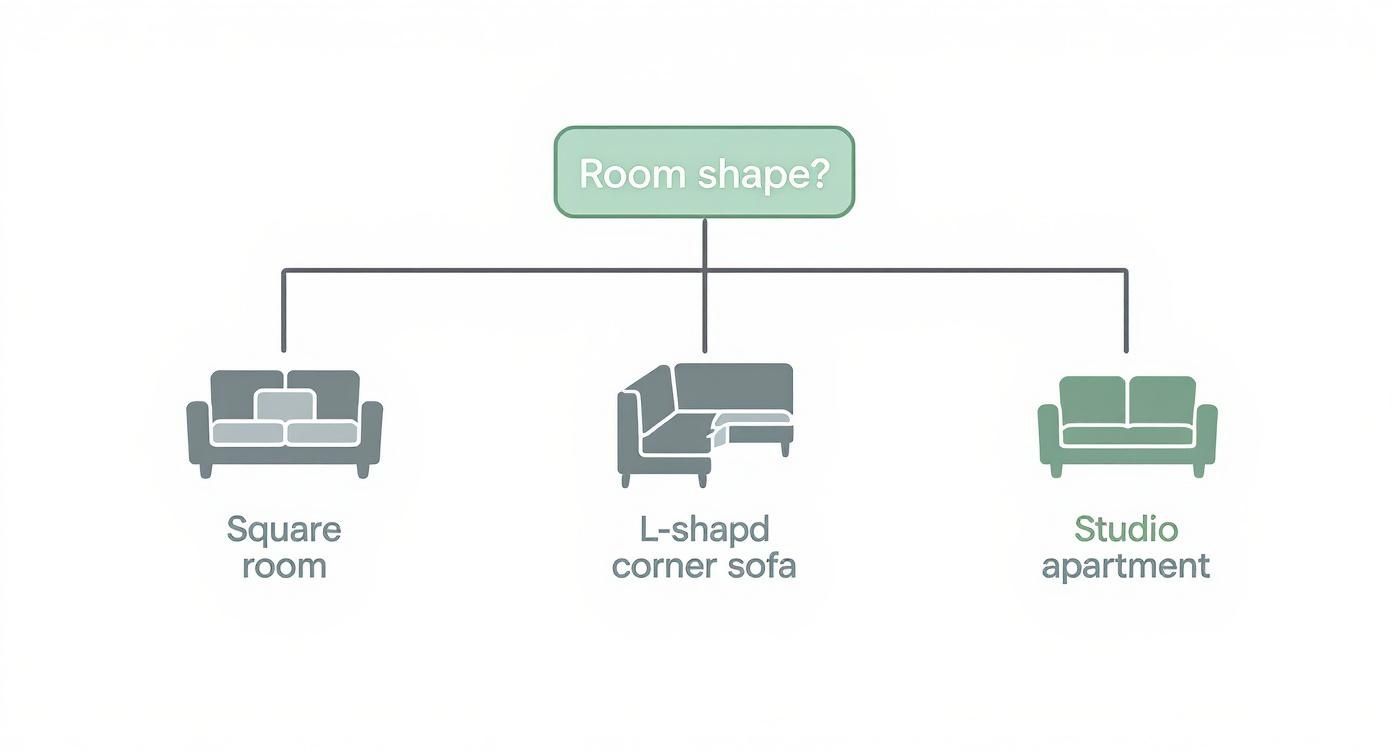
As the diagram shows, matching your primary sofa to your room's layout is the foundation for making the most of your space from the very beginning.
What to Look For in High-Quality Multifunctional Furniture
Not all multi-functional furniture is created equal. For these pieces to be genuinely useful, they need to be well-designed and built to last—especially since they'll be doing double or triple duty compared to their single-purpose cousins.
When you're shopping, pay close attention to the mechanics and materials. You want to see durable hinges on storage ottomans, smooth gliding mechanisms on nesting tables, and sturdy frames on any piece that might also be used as seating. The hardware is just as important as the look. A flimsy lift-top on a coffee table or a wobbly hinge on a storage bench will quickly become more of a hassle than a help.
Take a modular sofa, for example—a prime piece of multi-functional design. The way the sections connect is absolutely crucial for both stability and ease of use. You can dive deeper into the specifics in our guide that answers, "what is a modular sofa?".
At Elite Sofas UK, we build our furniture with robust construction in mind. We believe every piece should not only save you space but also stand up to the rigours of daily life, giving you both longevity and peace of mind.
Mastering Your Layout with Smart Arrangement Strategies
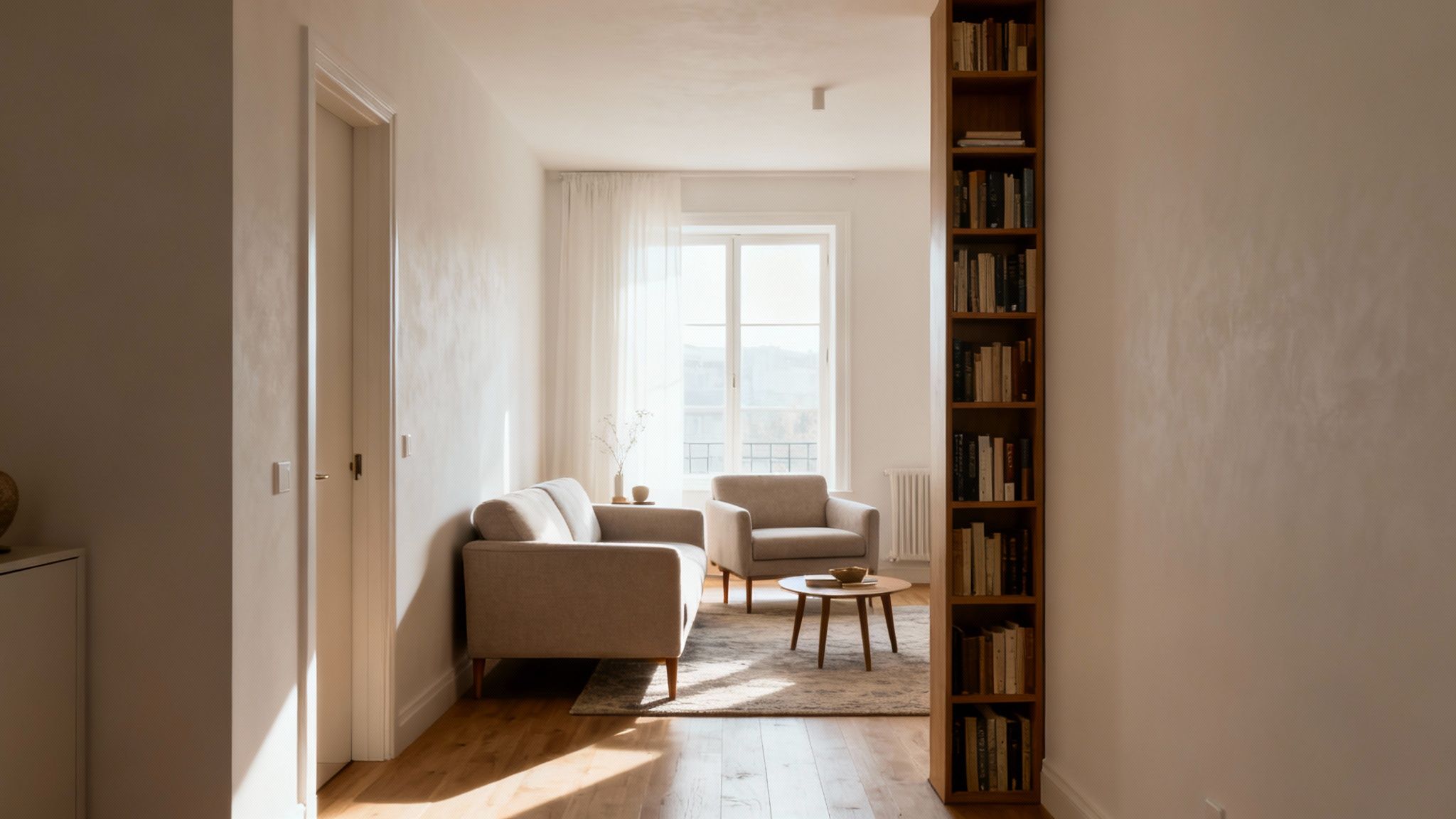
Choosing the perfect space saving furniture living room pieces is only half the battle. The real magic happens when you arrange them. A clever layout can make a cramped room feel open and inviting, improving the flow of daily life and creating a space that feels intentional, not just thrown together. Think of it as choreography for your furniture; every piece has its place, and together they create a beautiful performance.
Before you start any heavy lifting, grab a tape measure. It sounds simple, but getting the exact dimensions of your room—including doors, windows, and any odd corners—is the crucial first step. Do the same for your key furniture items. This preparation lets you sketch out a plan, saving you from the nightmare of a new sofa that’s just a few inches too big.
Establish Clear Pathways
Imagine your living room has its own road network. The main goal is to keep the traffic flowing. Creating clear, unobstructed pathways is key to making a room feel open rather than cluttered. As a rule of thumb, try to leave at least 30 inches of width for major walkways so people can move around without having to shuffle sideways past the coffee table.
Before you place a single item, figure out the natural entry and exit points. Your layout should guide people through the space, not force them to navigate an obstacle course. This simple focus on flow is one of the most powerful tricks for making a small room feel larger and more organised.
Anchor the Room and Create Zones
Your sofa is almost always the star of the show, the anchor piece that dictates where everything else goes. Placing it against the longest wall is a classic move to maximise floor space. Alternatively, you can use it to divide an open-plan area into distinct zones, creating a clear separation between your lounge and dining spaces.
Once your sofa is set, build the rest of the room around it. A great layout often includes:
- A Conversational Zone: Arrange chairs so they face each other to encourage easy conversation. No one wants to crane their neck to chat.
- A Media Zone: Make sure your seating has a comfortable line of sight to the television, without blocking any of your pathways.
- A Quiet Corner: If you have the space, a single armchair and a floor lamp can create the perfect cosy nook for reading.
For a deeper dive, our guide on how to arrange furniture in a small living room is packed with specific ideas for all sorts of room shapes and tricky layouts.
Embrace Vertical Space
When floor space is tight, look up. Using vertical space is a timeless design secret that draws the eye upward, creating an illusion of height that makes the whole room feel grander. Instead of wide, low bookcases that eat up floor area, choose tall, slender shelving units.
Floating shelves are another fantastic option. They give you a home for books, plants, and art without taking up an inch of floor space. This keeps the ground level clear, which is essential for achieving that light, airy feel everyone is after.
The secret to making a small room feel bigger is often counterintuitive: pull your furniture away from the walls. Just a few inches of breathing room behind a sofa creates a shadow that tricks the eye into seeing more depth.
This tiny gap stops the room from feeling like everything has been squashed against the edges. It’s a subtle yet incredibly effective technique that adds a real touch of sophistication to your design. By putting these strategies into practice, you can create a living room that’s not just functional, but feels surprisingly spacious and beautifully put together.
Styling a Compact Living Room with Design Tricks
Once you've arranged your core space saving furniture living room pieces, it's time for the fun part: styling. This is where you bring everything together, transforming a functional layout into a room that feels bigger, brighter, and completely your own. These aren't just decorating tips; they're clever visual tricks that play with light and perception to open up the space.
The right styling choices can make a small room feel surprisingly airy and expansive. It’s not about embracing stark minimalism, but about making smart, strategic decisions with colour, light, and accessories. You're enhancing the space you have, making it feel both larger and genuinely inviting.
Let There Be Light and Reflection
One of the oldest tricks in the book is also one of the best: a great big mirror. When placed in the right spot, a mirror can visually double the size of your room. The classic move is to hang it opposite a window. It will catch all that natural light and bounce it right back into the room, instantly brightening up dim corners and creating a real sense of depth.
Reflective surfaces have a similar effect. A glass coffee table, for instance, or a media unit with a glossy finish won't feel as visually heavy as a solid wood equivalent. Light can pass through and around these pieces, which helps create a feeling of openness and stops the room from feeling bogged down by bulky furniture.
Elevate Your Furniture and Lighting
Here’s a simple rule that works wonders: the more floor you can see, the bigger the room will feel. That’s why furniture with exposed, slender legs—what designers often call 'leggy' furniture—is perfect for small spaces. When a sofa, armchair, or console table is raised off the ground, your eye can see the floor continuing underneath, which creates an illusion of more space. It's a subtle touch that prevents the room from feeling cluttered at ground level.
Your lighting is just as important. Floor lamps can eat up precious square footage, so it's worth looking at alternatives:
- Wall Sconces: These give off beautiful ambient light without taking up any floor or table space at all.
- Pendant Lights: A stylish pendant light is a great way to draw the eye upward, making the ceiling feel higher.
- Slim Floor Lamps: If you absolutely need a floor lamp, look for a model with a very small, heavy base and a thin, elegant profile.
By keeping your surfaces and floors as clear as possible, you’re not just saving physical space. You’re also creating a cleaner, more organised look that makes the entire room feel more spacious and intentional.
Use a Cohesive Colour Palette
Colour has a huge impact on how we perceive a room. Light, neutral palettes—think soft greys, warm off-whites, and muted beiges—are a go-to for small living rooms for a reason. They reflect light beautifully and make walls feel like they’re further away. This doesn’t mean the room has to be bland. You can create plenty of depth with a monochromatic scheme, layering different shades and textures of the same core colour.
If you're a fan of bold colours, just use them strategically. A few vibrant cushions, a colourful throw, or a single statement piece of art can inject life into the room without overwhelming it. The goal is to keep the overall look cohesive and calm, not chaotic.
Finally, think about scale. A tiny rug in a small room will only make it look smaller. Instead, choose a rug that’s large enough for at least the front legs of your sofa and chairs to sit on. The same logic applies to art; one or two larger pieces often work better than a busy gallery wall of tiny frames. These final touches will pull your space saving furniture living room design together, creating a stylish and comfortable retreat you'll love spending time in.
A Few Common Questions
Choosing the right furniture for a smaller living room often brings up a few key questions. Let's tackle some of the most common ones to help you feel confident in your decisions and turn those tricky spaces into stylish, functional homes.
How Do I Furnish a Very Narrow Living Room?
When you're dealing with a long, thin room, the goal is to work with the lines, not against them. Avoid anything bulky that will eat into your walkway. A slim two-seater sofa against one of the longer walls is a great starting point, complemented by a slender coffee table that keeps the path clear.
The trick is to draw the eye upwards to create a sense of height and space. Think vertically with your storage—floating shelves or tall, skinny bookcases are perfect for this.
Here's a classic interior design secret: hang a large mirror on one of the long walls. It's an incredibly effective way to create the illusion of width, making the entire room feel more open and balanced by visually pushing the walls apart.
Are Sofa Beds Actually Comfortable These days?
Absolutely. The lumpy, awkward pull-outs of the past are long gone. Today's sofa beds are a world away from what you might remember, making them a brilliant piece of space saving furniture for a living room.
The best modern designs are built for genuine comfort and regular use. When you're shopping, look out for models that feature:
- High-density foam or memory foam mattresses for proper support.
- Sturdy, smooth mechanisms that make switching from sofa to bed a breeze.
A quality sofa bed now offers a sleeping experience that rivals a standard bed, so you can be sure your guests will get a genuinely restful night’s sleep.
What Are the Best Paint Colours for a Small Living Room?
In a compact space, light and neutral colours are your secret weapon. Shades like off-white, soft grey, and pale beige work wonders because they reflect light, which instantly makes a room feel larger and more airy.
If you want a more sophisticated feel, try a monochromatic colour scheme. Playing with different tones and textures of the same colour adds depth and character without overwhelming the space. You can easily inject a pop of personality with vibrant cushions, a colourful rug, or a piece of statement art.
Ready to reclaim your space with furniture that’s as smart as it is stylish? Explore the premium collection at Elite Sofas UK and discover the perfect sofa to transform your living room. Find your ideal fit at https://www.elitesofas.uk.
Article created using Outrank


